
Dental Implant Placement
Dental Implant Placement in Bethesda, MD
A missing tooth is never just a cosmetic problem. The moment a tooth is lost, the jawbone beneath it begins to resorb, neighboring teeth start to shift, and the bite changes in ways that create cascading problems over time. Dental implants are the only tooth replacement option that addresses all of these issues simultaneously — replacing the visible tooth and the root beneath it, preserving bone, and restoring full function. At Bethesda Family Dental in Bethesda, MD, implant placement is a carefully planned, precision procedure designed to deliver results that last decades.
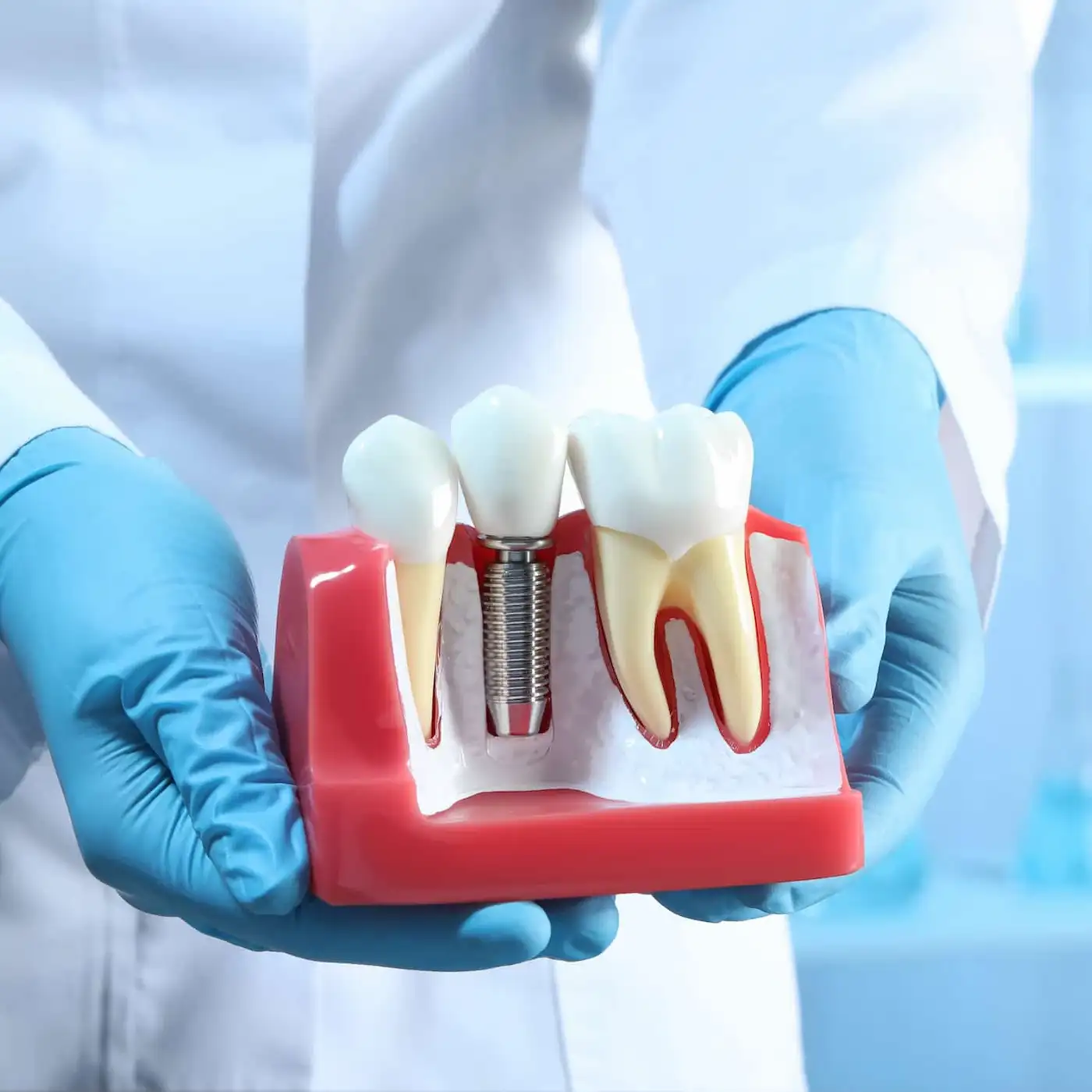
Unlike dentures or bridges, which sit on top of existing structures, an implant is surgically placed directly into the jawbone. It functions as an artificial tooth root — a titanium post that integrates with the bone through a process called osseointegration, creating a stable, permanent anchor for a crown, bridge, or full-arch restoration. The result is a replacement tooth that looks, feels, and functions like a natural one.
- Treatment planning and imaging: Successful implant placement begins long before surgery. Cone beam CT imaging is used to assess bone volume, density, and the position of critical anatomical structures such as nerves and sinuses. This three-dimensional picture allows the team to plan the precise angle, depth, and diameter of the implant before any incision is made — eliminating guesswork and reducing surgical risk.
- Bone and tissue evaluation: Not every patient is immediately ready for implant placement. Those with insufficient bone volume may require bone grafting before the implant can be placed, while patients with thin or receded gum tissue may benefit from gum grafting to create an adequate soft tissue envelope around the implant site. These preparatory steps are not optional extras — they are what determines whether the implant succeeds or fails long-term.
- The surgical procedure: Implant placement is performed under local anesthesia, with sedation available for patients who prefer it. A small incision is made in the gum tissue to access the bone, the implant site is carefully prepared using a series of precision drills, and the titanium implant is placed at the planned depth and angle. The gum tissue is then sutured around the implant to begin healing. The procedure itself typically takes one to two hours depending on the number of implants being placed.
- Osseointegration — the healing phase: After placement, the implant must fuse with the surrounding bone before it can bear the load of a restoration. This process takes three to six months and is the foundation of the implant's long-term stability. During this period, a temporary restoration may be provided so the patient is never without a tooth in the treated area.
- Single implants and full-arch solutions: Implant placement is appropriate for patients replacing a single missing tooth with a single implant, or for those seeking a complete full-arch restoration through All on X implants. The surgical principles are the same — what changes is the number of implants placed and the type of final restoration attached.
Are You a Candidate for Dental Implants?
Most healthy adults with a missing tooth or teeth are candidates for dental implants, but a thorough clinical evaluation is required to confirm suitability. These are the key factors that determine whether implant placement is appropriate for you:
- Adequate bone volume: The implant needs sufficient bone to anchor into. Patients who have experienced bone loss due to gum disease, infection, or prolonged tooth absence may need a bone graft first — but this does not disqualify them from implants. It simply means the process requires an additional preparatory step before placement can proceed.
- Healthy gums: Active gum disease is a contraindication for implant placement. Bacteria that destroyed natural teeth will attack implants just as aggressively. Any existing periodontal disease must be fully treated and stabilized before an implant is placed — otherwise the implant is being set up to fail from the start.
- Good general health: Certain systemic conditions — uncontrolled diabetes, autoimmune disorders, or medications that affect bone metabolism — can impair osseointegration. A full medical history review is part of every implant consultation so that any factors affecting healing are identified and managed before treatment begins.
- Commitment to long-term maintenance: Implants do not decay, but the tissue around them can develop infection — a condition called peri-implantitis — if oral hygiene is neglected. Patients who commit to regular professional maintenance and consistent home care protect their implant investment for the long term.
Start Your Implant Journey at Bethesda Family Dental
Dental implants are the closest thing modern dentistry has to a natural tooth — in function, in feel, and in longevity. With proper placement and maintenance, implants routinely last 20 years or more, making them the most cost-effective long-term solution for tooth replacement despite the higher initial investment compared to alternatives.
The process starts with a single consultation. Our team will review your imaging, assess your bone and tissue levels, discuss your medical history, and give you a clear, honest picture of what implant treatment involves for your specific situation — including whether any preparatory procedures are needed, what the timeline looks like, and what the final restoration will achieve. No vague promises, no pressure — just a straightforward clinical assessment and a plan that makes sense for your mouth.
Contact Bethesda Family Dental today to schedule your implant consultation.