
Crown Lengthening
Crown Lengthening in Bethesda, MD
Crown lengthening is a surgical procedure that reshapes the gum tissue and, when necessary, the underlying bone to expose more of the natural tooth structure above the gumline. Despite the name, the tooth itself doesn't change — it's the surrounding tissue that is repositioned to reveal what was always there. At Bethesda Family Dental in Bethesda, MD, crown lengthening is performed for both restorative and cosmetic purposes, and it is often the critical step that makes other treatments possible.
The procedure is straightforward in concept but demands precise execution: too little tissue removed and the result is insufficient; too much and the tooth becomes vulnerable. Our team evaluates each case carefully to determine exactly how much reshaping is needed to achieve a functional, aesthetic, and biologically stable outcome.
- Restorative crown lengthening: When a tooth is severely broken down, decayed near the gumline, or fractured below it, there may not be enough tooth structure visible above the gum to support a porcelain crown or other restoration. Crown lengthening exposes additional tooth structure so the restoration has a solid, stable foundation to bond to — without it, the crown would sit on gum tissue rather than tooth, and fail prematurely.
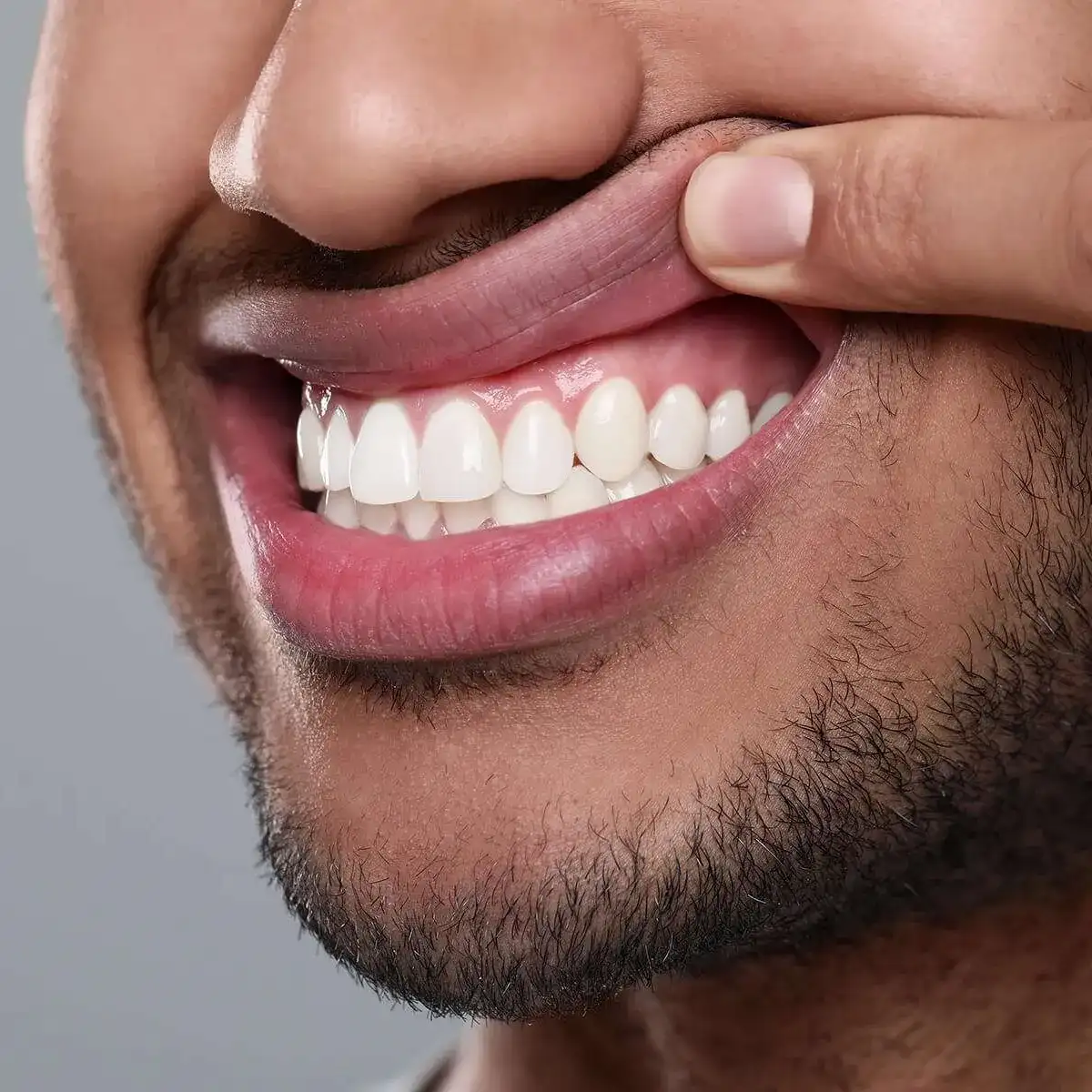
- Cosmetic crown lengthening: Patients with a gummy smile — where excess gum tissue covers a disproportionate amount of the tooth surface — can achieve a more balanced, attractive smile through cosmetic crown lengthening. Removing the excess tissue reveals the full natural length of the teeth, creating a result that looks cleaner and more proportionate as part of a broader smile makeover.
- How the procedure works: Local anesthesia is administered before any tissue is touched. The gum tissue is carefully incised and reflected to access the underlying bone. Where necessary, a small amount of bone is reshaped to establish the correct biological width — the minimum distance between the bone crest and the margin of a future restoration that the body requires to maintain healthy tissue. The gums are then sutured at the new, lower position.
- Healing and timeline: Initial soft tissue healing takes approximately two weeks. However, the final position of the gumline continues to stabilize for up to three months, which is why definitive restorations — such as a crown — are typically placed only after the tissue has fully matured and settled. Rushing this step compromises the final result.
- Single tooth or multiple teeth: Crown lengthening can be performed on a single tooth to enable a specific restoration, or across multiple teeth simultaneously when the goal is cosmetic improvement of the overall smile. The scope of the procedure is determined during the consultation based on clinical measurements and your aesthetic goals.
Restorative vs. Cosmetic Crown Lengthening
Crown lengthening serves two distinct purposes, and understanding which one applies to your situation helps clarify why the procedure is being recommended and what the outcome will look like:
- Functional necessity: When a dentist recommends crown lengthening before placing a restoration, it is not optional — it is a biological requirement. Placing a crown margin too close to or beneath the bone crest triggers a chronic inflammatory response that destroys the surrounding tissue over time. Crown lengthening establishes the space the body needs to maintain health around the restoration indefinitely.
- Cosmetic transformation: A gummy smile is one of the most common aesthetic complaints patients bring to their dental team. Crown lengthening addresses this at the source by permanently repositioning the gumline rather than masking it. The result is a smile where the teeth and gums are in correct proportion — something no amount of whitening or bonding can achieve on its own.
- Often both at once: Many patients requiring restorative crown lengthening also benefit cosmetically from the procedure. When gum tissue is repositioned to accommodate a crown, the surrounding teeth frequently look better as a result — making this one of the more efficient procedures in terms of functional and aesthetic return per single intervention.
- Performed by a periodontist: Crown lengthening is a periodontal surgical procedure. The precision required to recontour both soft tissue and bone while respecting the biological width demands specialized training — this is not a general dentistry procedure performed with a laser in a few minutes.
Find Out If Crown Lengthening Is Right for You
Crown lengthening is one of those procedures that patients rarely seek out on their own — it's typically recommended as a necessary step toward something else they want, whether that's a stable crown on a badly broken tooth or a smile they're no longer embarrassed by. Either way, the outcome is the same: a healthier, more functional, better-looking result that would not have been possible without it.
If your dentist has told you that a tooth doesn't have enough structure for a restoration, or if you've always felt your smile shows too much gum, crown lengthening may be exactly what's standing between you and the result you're after. The team at Bethesda Family Dental will assess your tissue levels, bone position, and aesthetic goals to determine whether the procedure is appropriate and what you can realistically expect from it.
Contact us today to schedule a consultation.